Stop Blaming Posture for Golf-Related Joint Pain
A strong body of rehabilitation literature has challenged the “poor posture” myth. A growing group of modern physical therapists worry less about one ideal posture and more about the adage that “the best posture is the next posture.”
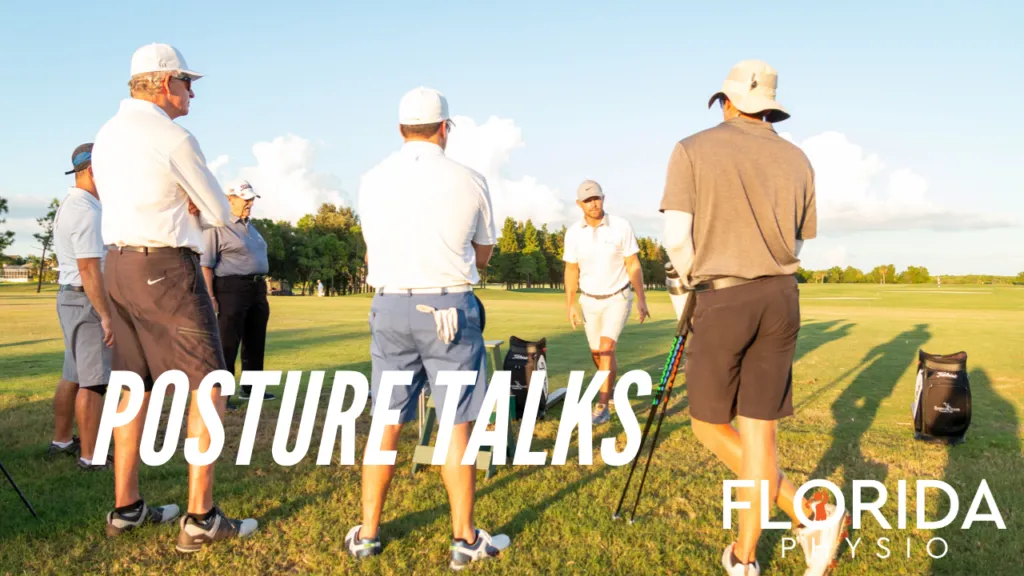
Golf address positions show why. Tommy Fleetwood has used a C-posture, Adam Scott has moved in and out of the classic S-posture, and Matthew Wolff has a dynamic setup of his own.
Why Static Posture Labels Fall Short
One traditional physical therapy exam is the plumb-line screen, a static assessment of the head, shoulders, spine, hips, knees, and feet. It is often connected to muscle-imbalance theories that suggest stretching what appears tight and strengthening what appears weak.
Those theories have not performed well in rigorous academic and clinical research. Static posture can be difficult to assess reliably, and the findings correlate poorly with pain and function. Treating posture labels does not work better than generally getting more exercise.
Language Can Affect Pain and Function
There is also growing evidence about nocebo effects: negative statements about someone’s body can influence the pain and function that person experiences. Labels can create fear and catastrophizing rather than confidence.
Use Screens Without Turning Them Into Diagnoses
The Titleist Performance Institute setup posture screen groups a golfer’s address into S-curve, C-curve, or neutral. A screen can help start with a wide lens and narrow the assessment toward relevant areas, but a static position should not become a diagnosis.
In golf rehabilitation and performance, the goal is to move away from labeling static positions. Assessment should account for how difficult those labels are to apply reliably and avoid language that can make a golfer fearful of normal movement variation.
References
- Fedorak C, Ashworth N, et al. Reliability of the visual assessment of cervical and lumbar lordosis: how good are we? Spine. 2003;28:1857–1859.
- Roffey DM, Wai EK, Bishop P. Causal assessment of awkward occupational postures and low back pain: results of a systematic review. The Spine Journal. 2010;10:89–99.
- Youdas JW, Garrett TR, Egan KS, et al. Lumbar lordosis and pelvic inclination in adults with chronic low back pain. Physical Therapy. 2000;80:261–275.
- Barrett E, O’Keeffe M, O’Sullivan K, Lewis J, McCreesh K. Is thoracic spine posture associated with shoulder pain, range of motion and function? A systematic review. Manual Therapy. 2016;26:38–46.
- Dolphens M, Cagnie B, Coorevits P, et al. Sagittal standing posture and its association with spinal pain. Spine. 2012;37(19):1657–1666.
- Christensen ST, Hartvigsen J. Spinal curves and health: a systematic critical review. Journal of Manipulative and Physiological Therapeutics. 2008;31(9):690–714.
- Villumsen M, Samani A, Jørgensen MB, et al. Are forward bending of the trunk and low back pain associated among Danish blue-collar workers? Ergonomics. 2015;58(2):246–258.
- Petersen GL, Finnerup NB, Colloca L, et al. The magnitude of nocebo effects in pain: a meta-analysis. Pain. 2014;155(8):1426–1434.